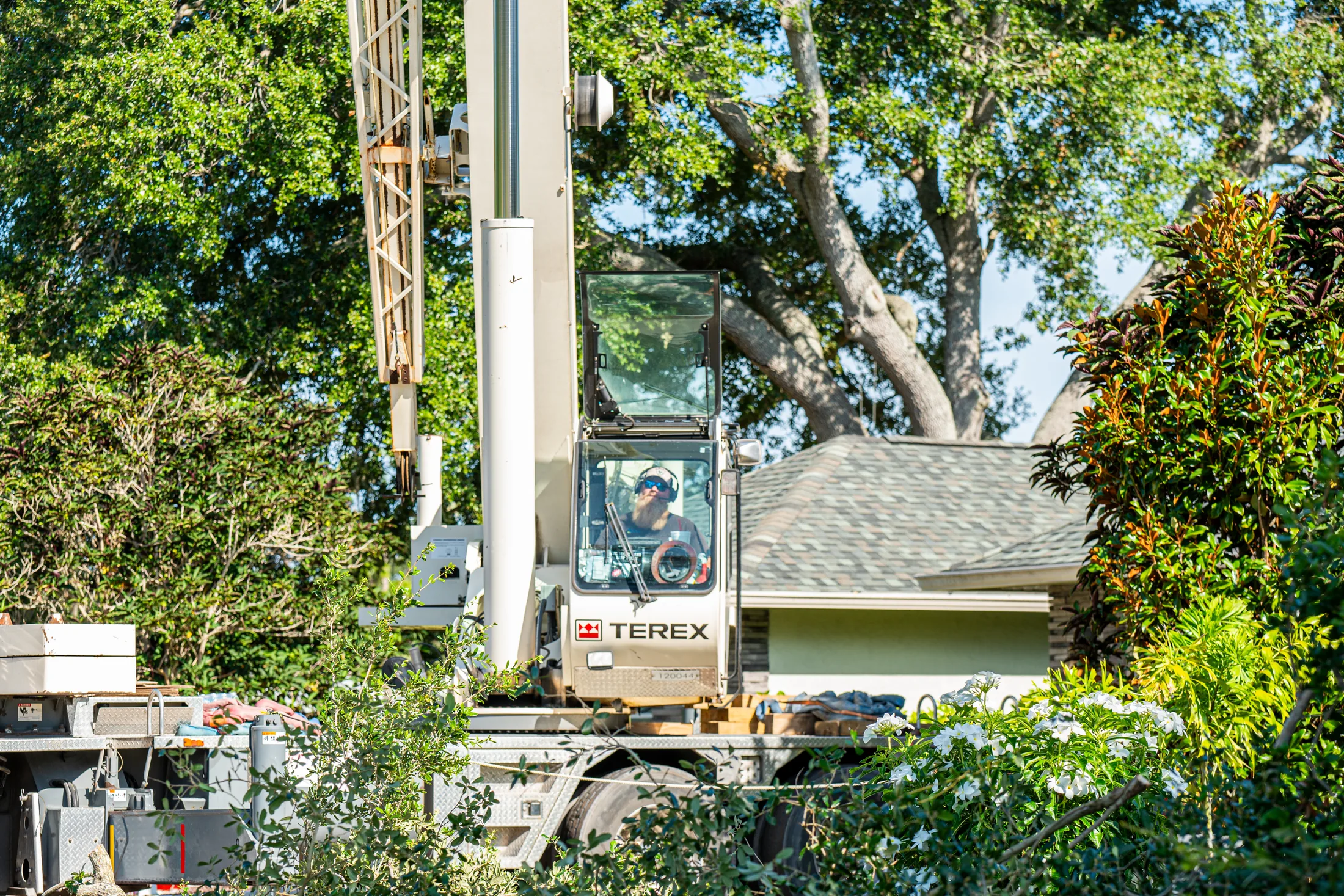
A Tree Fell on Your Sarasota Property — Now What? Emergency Steps for Homeowners
A tree just fell on your Sarasota property. Here’s exactly what to do, in order: get everyone away from the tree and stay out from under anything still hanging; assume any downed line touching it is live and call FPL, not a chainsaw; call 911 if the tree hit an occupied structure or a gas line; photograph everything from a safe distance before anyone touches it; call your insurance company to open a claim; and then call a licensed, insured tree service for the actual removal. Do not climb on the trunk, do not cut anything under tension, and do not let a stranger with a chainsaw who “happened to be in the neighborhood” start work without proof of insurance.
That’s the short version. The rest of this guide walks through each step so you can protect your family, your wallet, and your insurance claim.
First 30 Minutes: Safety Before Anything Else
Fallen trees are more dangerous after they land than most homeowners realize. Trunks and limbs settle, roll, and spring loose without warning, and a root ball that’s partially lifted can slam back down. Keep kids and pets inside, walk the perimeter at a distance, and check for three specific hazards:
- Power lines — if the tree is touching or near any wire, treat the entire tree, the ground around it, and any fence it touches as energized. Call FPL at (800) 468-8243 and wait.
- Structural damage — if the tree punched into the roof or walls of an occupied home, get everyone out and call 911 to have the structure checked before re-entering.
- Gas smell — a fallen tree can shear service lines. If you smell gas, leave immediately and call from a neighbor’s yard.
If none of those apply — say a big oak dropped across the back lawn in one of Sarasota’s summer thunderstorms — you have time to do the next steps right. And summer is when it happens: Sarasota sits in one of the most lightning-and-thunderstorm-prone regions in the country, and the June-through-September wet season delivers most of the area’s roughly 55 inches of annual rain, saturating soil until even healthy-looking trees tip over.
Document Everything for Your Insurance Claim
Before a single branch is cut, build your evidence file. Insurers pay documented claims and fight vague ones.
- Photograph the whole scene from multiple angles — wide shots showing the tree and the damage together.
- Take close-ups of every point of damage: roof, pool cage, fence, vehicles, AC unit, gutters.
- Capture the base of the tree and root ball — this shows whether it uprooted or snapped, which matters to adjusters.
- Shoot a slow walk-around video narrating the date, time, and what happened.
- Save weather alerts or news reports from the storm as proof of the event.
- Keep every receipt — tarps, hotel nights if you had to leave, and the tree work itself are often reimbursable.
Then call your insurance company’s claims line. Ask two questions: what’s covered, and whether they require an adjuster to see the tree before removal. Many carriers are fine with prompt removal as long as you’ve photographed thoroughly — some even require you to mitigate further damage quickly.
Who to Call, and in What Order
| Situation | Call first |
|---|---|
| Tree on power lines or line down | FPL (800) 468-8243 — never a tree service first |
| Tree into an occupied house, injuries, or gas smell | 911, then your insurance carrier |
| Tree on roof, fence, car, or blocking your driveway | Insurance claims line, then a licensed tree service |
| Tree down in the yard, no structure damage | A licensed tree service at your convenience |
| Neighbor’s tree fell onto your property | Your own insurance carrier — your policy typically handles it |
When you do call a tree company, verify two things before anyone starts a saw: general liability insurance and workers’ compensation coverage. If an uninsured worker is hurt on your property, you can be the one paying. After every big storm, out-of-town “storm chasers” flood Sarasota neighborhoods with cash-only offers and no paperwork — the Florida Department of Agriculture and Consumer Services keeps a good rundown of how to avoid post-disaster scams. If a fallen tree has you stuck right now, our local, insured tree removal crew handles emergency calls across the area — call (941) 451-9730 and we’ll get eyes on it fast.
What NOT to Do (Even If You Own a Chainsaw)
- Don’t cut limbs that are bent or pinned — wood under tension releases violently when cut.
- Don’t work under a leaning trunk or a hanging branch, ever.
- Don’t climb onto a tree that’s resting on a roof; your weight can shift it and multiply the damage.
- Don’t touch anything within 30 feet of a downed line, including puddles and metal fences.
- Don’t sign an assignment-of-benefits contract on the spot with a door-knocking contractor.
After the Cleanup: Preventing the Next One
Once the immediate mess is handled, walk the rest of your property with a critical eye. Trees rarely fall without warning signs — dead canopies, fungus at the base, root damage from construction. Our guide on why dead trees in Florida need to come out covers the warning signs in detail, and our Sarasota tree service page shows everything we handle locally, from hazard assessments to stump grinding after the fact.
Frequently Asked Questions
Who pays when a tree falls on my house in Florida?
In most cases, your own homeowners insurance pays for damage to your structures — even if it was a neighbor’s tree. The neighbor’s policy generally only comes into play if you can show they knew the tree was dead or hazardous and ignored it. That’s why documenting the tree’s condition immediately matters so much.
Should I remove a fallen tree before the insurance adjuster sees it?
Call your claims line first and ask. Most carriers accept thorough photo and video documentation and actually want you to prevent further damage promptly, such as tarping a roof. Get written or recorded confirmation, document everything, and keep all receipts from the removal for reimbursement.
How much does emergency tree removal cost in Sarasota?
Emergency removals typically run higher than planned ones — often $500 to $2,500 or more depending on the tree’s size, whether it’s on a structure, and whether a crane is needed. Insurance frequently covers removal when the tree damaged an insured structure, subject to your deductible and policy limits.
Is a tree touching a power line the tree company’s job or FPL’s?
FPL’s, first. Utility crews must de-energize or clear the line before any private tree crew can legally and safely work. Call FPL at (800) 468-8243, report the location, and keep everyone far away. Once the line is safe, a licensed tree service handles the rest of the removal.
A fallen tree is stressful, but the playbook is simple: keep people away, let FPL and 911 handle lines and structural danger, document like a lawyer, and hire insured local pros for the removal. Yoders is family-run and right here in Sarasota — when the storm passes, call (941) 451-9730 and we’ll take it from there.