How to Tell If a Tree Has Root Damage — Warning Signs Sarasota Homeowners Should Know
Root damage is one of the most overlooked — and most dangerous — tree problems in Sarasota. Unlike a cracked branch or hollow trunk, root problems are largely invisible until they’ve already become serious. Damaged or diseased roots can cause a healthy-looking tree to fail without warning, especially during the heavy storms Sarasota sees every summer. This guide explains how to spot the warning signs, what causes root damage in Florida, and when it’s time to call the team at Yoder’s Tree and Land Services.
Warning Signs a Tree Has Root Damage in Sarasota
- Leaning that develops suddenly — A tree that was upright last month but is now leaning may have roots failing on one side.
- Heaving soil or raised ground — Surface roots lifting the soil indicate the tree is trying to anchor itself as deeper roots fail.
- Yellowing or thinning canopy — When roots can’t deliver water and nutrients, the canopy is the first to show stress.
- Wilting that doesn’t respond to rain — If leaves droop even after heavy rainfall, root rot may be blocking water uptake.
- Fungal growth at the base — Mushrooms or shelf fungi (conks) growing from roots or the trunk base are a classic sign of root rot.
- Cracks in pavement or foundation nearby — Invading roots can crack driveways, sidewalks, and foundations while being damaged by the concrete in return.
Common Causes of Root Damage in Sarasota
Sarasota’s shallow, sandy soil creates specific conditions that make root damage common:
- Root rot (Phytophthora, Armillaria) — Florida’s wet summers and poor soil drainage create ideal conditions for fungal root pathogens.
- Construction and compaction — Parking vehicles, running heavy equipment, or pouring concrete over root zones crushes fine feeder roots.
- Grade changes — Adding or removing soil over roots smothers them. Even 4″ of fill soil over surface roots can kill a mature tree.
- Utility work — Trenching for irrigation, gas lines, or cable cuts through roots that may be critical to the tree’s stability.
- Drought stress — Extended dry periods cause fine roots to die back. When rains return, the tree may not recover fully.
When Root Damage Means the Tree Has to Come Down
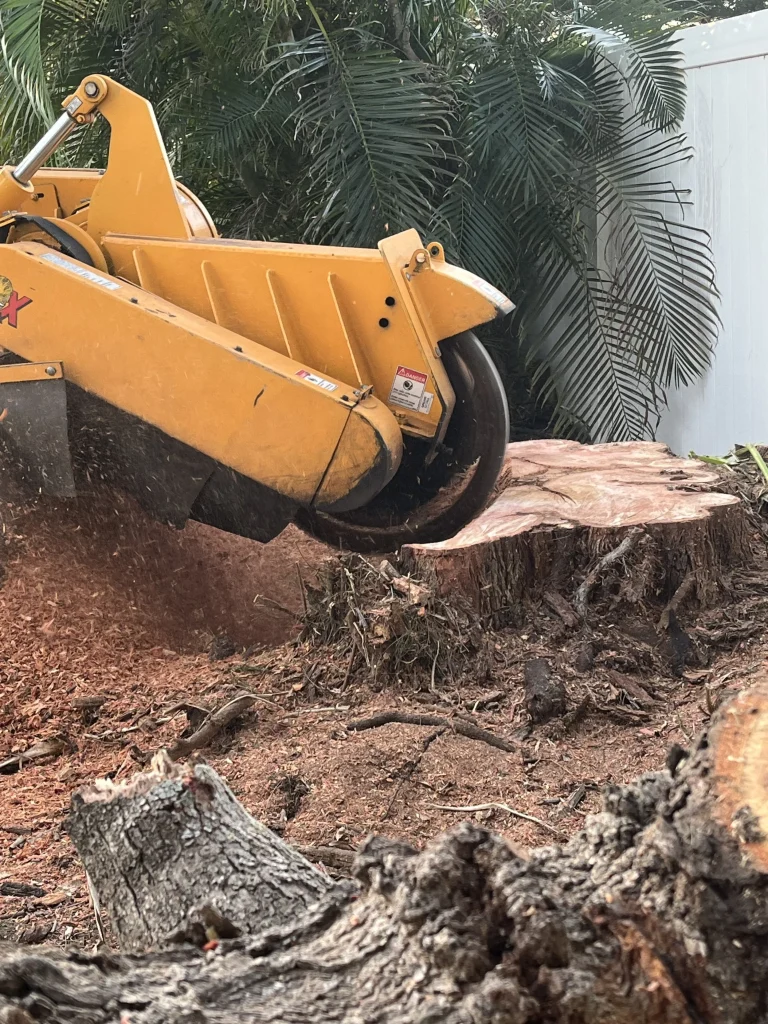
Not every root problem leads to removal — but some do. A tree needs to be evaluated for removal when: advanced root rot has spread to more than 30–40% of the root system; the tree is already leaning toward a structure, vehicle, or play area; fungal conks are present at or below the soil line (indicating significant internal decay); or the tree has already partially uprooted. In Sarasota’s hurricane-prone climate, a compromised root system is a serious liability. Our team can assess whether your tree is a Sarasota removal candidate or if it can be saved with targeted care. Also see our guide on stump grinding for what comes after removal.
Can Root Damage Be Repaired?
Minor root damage — from a single trench cut or limited compaction — can sometimes be managed through soil aeration, improving drainage, and eliminating the cause of damage. Severe root rot, however, is generally not reversible. If the tree is otherwise healthy and the damage is isolated, an arborist may recommend air spading (using compressed air to remove soil from roots without cutting them), mycorrhizal inoculation to strengthen roots, or targeted pruning to reduce the crown weight the damaged roots must support.
Protecting Sarasota Trees From Root Damage
- Mulch a 3–4 foot ring around tree bases to protect surface roots and retain moisture — but keep mulch away from the trunk.
- Avoid parking or driving over root zones (typically extending as far out as the canopy drip line).
- Before any digging, trenching, or construction within 20 feet of a mature tree, consult a tree professional.
- Improve yard drainage to prevent waterlogged soil around root systems during rainy season.
- Water established trees deeply and infrequently rather than shallow and frequent — this encourages deep root growth.
Frequently Asked Questions
How do I know if my tree has root rot?
Key signs include yellowing leaves, wilting despite adequate rain, fungal growth at the base, and soft or spongy wood near the soil line. A professional assessment with a probe or resistograph tool can confirm the extent of internal decay.
Can a tree survive root damage?
It depends on how much of the root system is affected and whether the cause of damage is eliminated. Trees with 50% or more root loss are generally not recoverable. Consult an arborist before deciding.
Will root damage always cause a tree to fall?
Not immediately — but it significantly increases the risk, especially during high winds. A tree that looks stable can topple quickly once a storm stresses an already-compromised root system. Don’t wait until after a storm to get an assessment.