Two Main Trunks on a Young Sarasota Tree: What to Ask About
Two competing trunks can need a planned structural approach rather than an abrupt cut that removes a large part of the canopy. Ask about attachment, tree age, species, and a sequence of smaller corrections. Early decisions should support the tree's future form without unnecessary foliage loss.
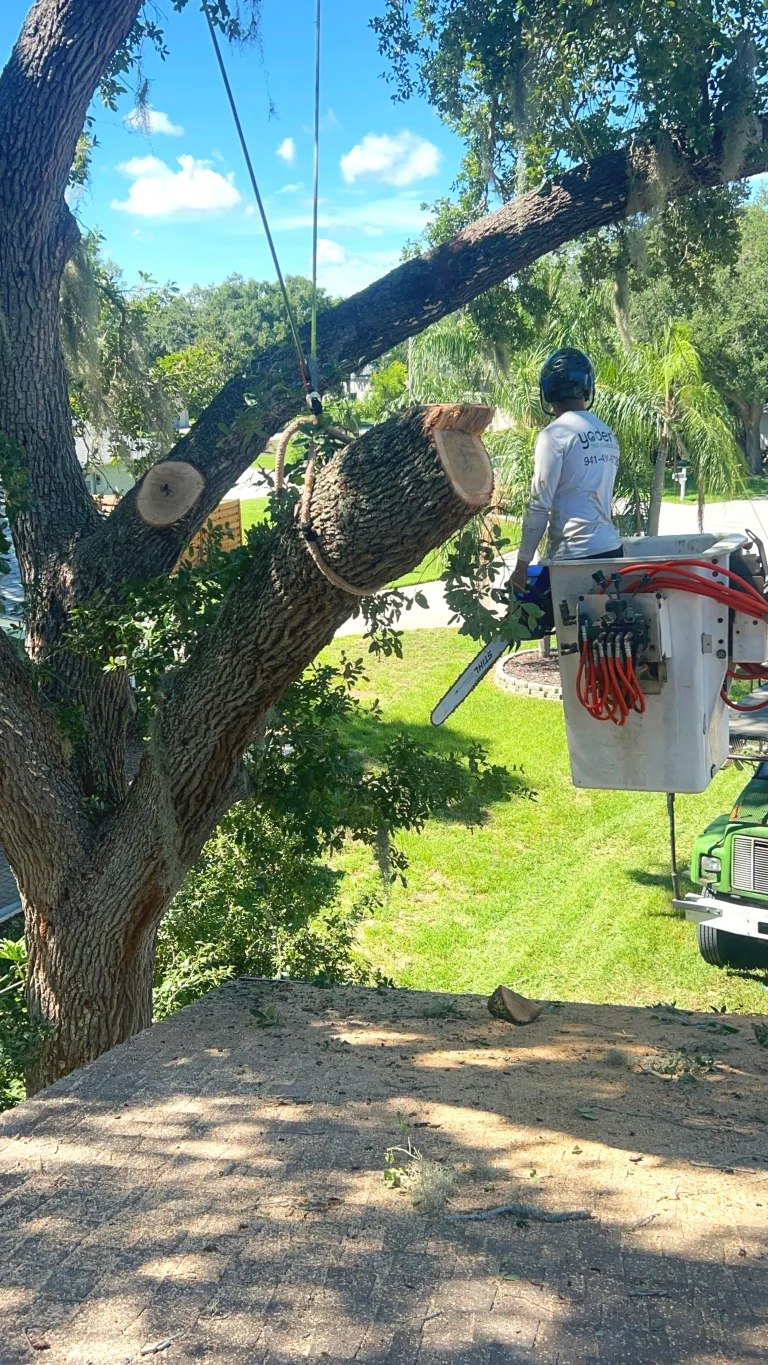
For example, two similarly sized stems on a developing tree may call for a staged decision rather than removing half the crown immediately.
In Sarasota, use this guide to prepare for a site review. The tree trimming service information explains the service context; the sections below focus on the decisions behind this particular request.
Start with the future canopy
Structural pruning is concerned with how a tree develops, not just how tidy it looks today. The evaluator considers the main stem, branch spacing, attachment, and the space available at maturity. A narrow residential lot may require different decisions from an open yard. Explain which buildings, driveways, and paths the tree must coexist with so the pruning objective supports the future landscape.
When stems compete for dominance, their size and attachment influence the choices. Removing one large stem all at once can create a substantial wound or imbalance. A gradual reduction may be considered in some cases, while other defects need a different response. Ask for the reasoning and sequence rather than demanding a particular cut based on an online diagram that may describe another species or growth stage.
Preserve useful foliage
Leaves supply the tree with energy, so removing more branches is not automatically better maintenance. The work should target a defined problem such as rubbing, breakage, clearance, or an unfavorable growth pattern. A proposal based only on thinning everything can miss that purpose. Ask how the crew will avoid unnecessary removal and how the remaining canopy will support the intended form.
What should the first site review establish?
Begin with the observation or practical constraint that prompted the request. Record its location, when it appeared, and which people or improvements are affected. The opening conversation should establish the problem before selecting a method. That keeps an appealing piece of equipment or a familiar service name from becoming the solution before the site has been evaluated.
- Review the location together.
- Identify the actual concern.
- Explain recent changes.
- Agree on the next decision.
When planning tree trimming in Sarasota, discuss the relationship with related property services before approving a sequence. Ask which stage changes the next step and which items are intentionally outside the estimate.
| Planning item | What to record |
|---|---|
| Main question | Two Main Trunks on a Young Sarasota Tree: What to Ask About |
| Relevant location | Sarasota |
| Primary scope | Tree Trimming |
| Next decision | Agree on the next decision |
| Review basis | The agreed objective, site conditions, and written scope |
Prepare the information that makes the estimate useful
Homeowners in Sarasota can prepare by collecting a few useful facts about the yard before the estimate. Explain how the family uses the affected space, where pets need to stay, and whether vehicles or deliveries restrict access. Mark known irrigation and other private installations rather than expecting the crew to know every feature below ground. If you will be away, name the person who can answer questions and approve changes. Keep a simple record of the problem and desired finish so both the household and contractor can refer to the same request.
- Photographs of the whole area and the specific concern, taken from safe ground positions.
- Known gate, driveway, private utility, and irrigation constraints that affect the route.
- A description of what should remain and how the space will be used after the work.
- Questions about cleanup, follow-up care, and any separate work needed for the final result.
For additional context, review the related planning guide and the UF/IFAS Florida tree-care guidance. General educational guidance does not establish every condition at this Sarasota property. Questions about approvals or project-specific requirements should be confirmed with the applicable authority before work begins.
Frequently Asked Questions
What is the first step for this request in Sarasota?
Two competing trunks can need a planned structural approach rather than an abrupt cut that removes a large part of the canopy. Ask about attachment, tree age, species, and a sequence of smaller corrections. Early decisions should support the tree's future form without unnecessary foliage loss.
What should I explain when requesting an estimate?
Describe the concern covered by this guide, its location in Sarasota, and the result you want. Provide safe photographs and explain access or timing constraints. Ask the estimator to identify the work limits, preparation, cleanup, exclusions, and any assumptions that need confirmation. Those details make the proposal usable rather than a price attached to an undefined task.
How should I handle a condition that changes after the visit?
Record the new observation, when it appeared, and what changed at the Sarasota property. Keep people outside any affected work or hazard area and contact the appropriate professional rather than improvising a repair. Share the earlier scope and photos so the follow-up considers both the original conditions and the new information.
Choose the next step around this property
Two competing trunks can need a planned structural approach rather than an abrupt cut that removes a large part of the canopy. The useful next step is a scope that addresses that concern and explains the remaining responsibilities. For tree trimming in Sarasota, contact Yoder’s Tree & Land Services at (941) 451-9730 to discuss the site, access, and intended result before arranging work.
Review the Sarasota service area and tree trimming options when preparing your request.