How to Protect Your Trees During Florida’s Rainy Season
Protecting your trees during Florida’s rainy season comes down to preparation before the storms and good drainage during them. The most important steps are pruning weak and dead limbs ahead of summer, improving drainage so roots do not drown in saturated soil, and inspecting trees for signs of stress or instability. Florida’s rainy season — roughly June through September — brings daily downpours, soggy ground, and the wind that comes with afternoon storms, all of which stress Sarasota trees. With a little proactive care, you can keep your trees healthy, standing, and far less likely to drop a limb on your home.
Why Is Florida’s Rainy Season Hard on Trees?
The combination of saturated soil and gusty storms is a tough one for trees. In Sarasota’s sandy soil, heavy rain quickly waterlogs the root zone, loosening a tree’s grip on the ground right when summer storm winds are pushing against a full, heavy canopy. That is why uprooted and split trees spike during the rainy months.
- Saturated soil: Waterlogged roots lose anchorage and can suffocate.
- Wind load: A dense summer canopy catches wind like a sail.
- Weak limbs: Dead or poorly attached branches break and fall first.
- Root rot and fungus: Constant moisture invites disease at the base.
- Lightning and standing water: Both add stress during peak storm season.
How Do I Prepare My Trees Before the Rainy Season?
The best protection happens before the first big storm. A little prep work in late spring pays off all summer for Sarasota homeowners.
- Prune dead, diseased, and weakly attached limbs that are most likely to fall.
- Thin dense canopies so wind passes through instead of pushing the whole tree.
- Check for leaning, cracks, or heaving soil at the base that signal instability.
- Improve drainage around valuable trees so roots are not sitting in water.
- Refresh mulch (kept off the trunk) to protect roots and steady soil moisture.
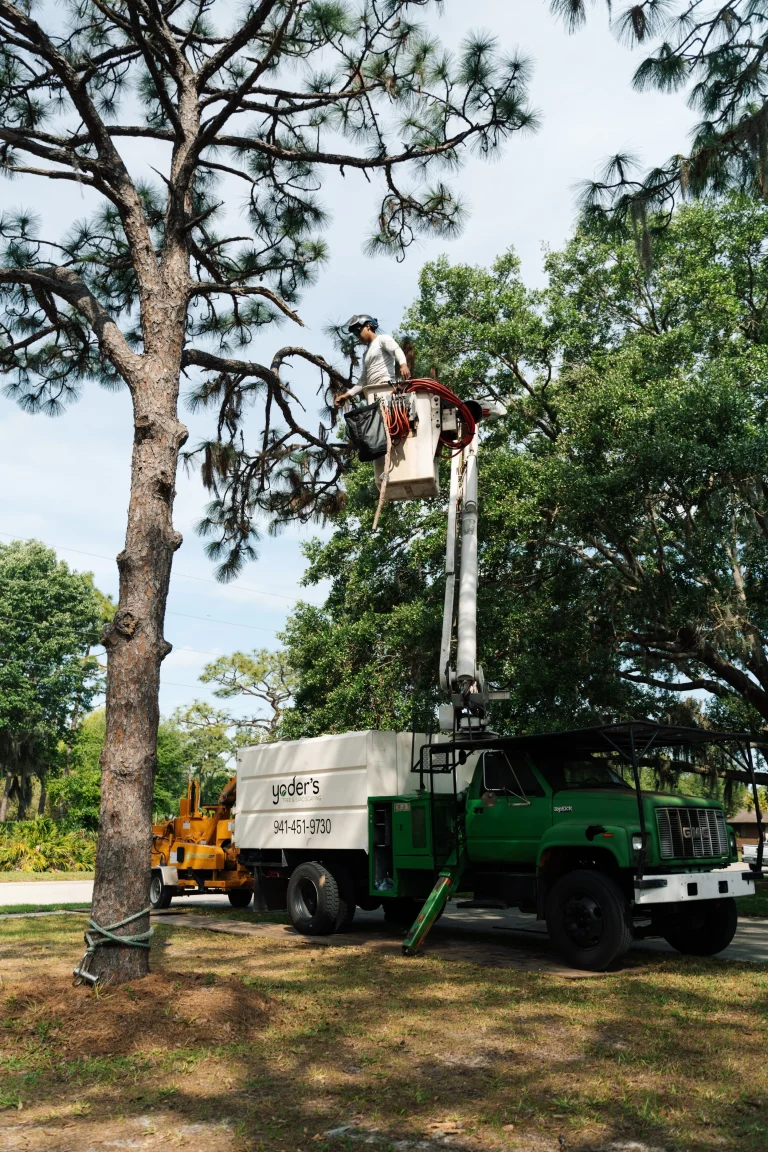
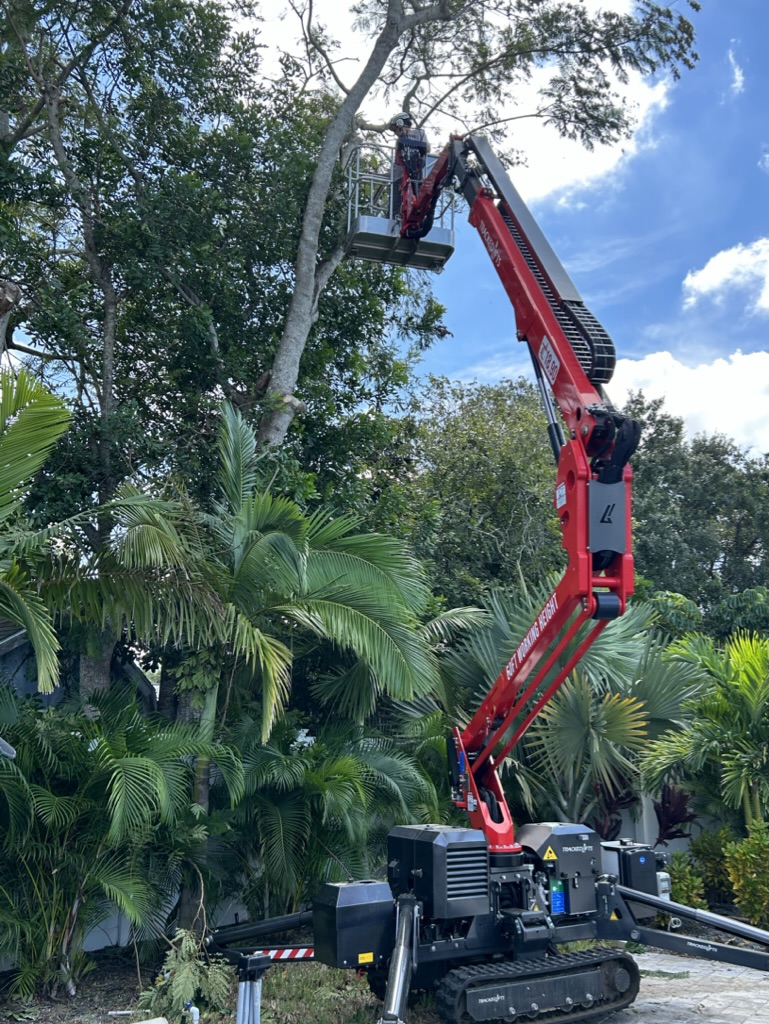
Proper, professional tree trimming is the single most effective storm-prep step, because thinning the canopy and removing weak limbs dramatically lowers the odds of failure.
Which Trees Are Most at Risk in a Sarasota Storm?
Not all trees handle Florida storms equally. Knowing which trees in your Sarasota yard are most vulnerable helps you prioritize inspection and pruning.
| Risk Level | Examples | Why |
|---|---|---|
| Higher risk | Laurel oak, water oak, fast-growers | Weaker wood, shorter lifespan, prone to breakage |
| Moderate risk | Pines, large Bradford-type ornamentals | Shallow roots or brittle limbs |
| Lower risk | Live oak, sabal palm, bald cypress | Native, wind-adapted, deep or flexible roots |
| Watch closely | Any leaning, dead, or storm-damaged tree | Already compromised before the season starts |
Florida’s native trees like live oak and sabal palm evolved to bend and survive tropical storms, which is one reason they are so valued in Sarasota landscapes. The University of Florida’s UF/IFAS Extension publishes wind-resistance ratings for Florida species worth reviewing before you plant.
What Should I Do During and After a Storm?
During the rainy season itself, stay observant. After each major storm, walk your yard and look for new leaning, fresh cracks, exposed roots, hanging limbs, or soil heaving at the base of larger trees. Do not attempt to remove large hanging or fallen limbs yourself — storm-damaged wood is under unpredictable tension and is one of the leading causes of tree-work injuries. Keep clear of any tree touching a power line and report it to the utility. If a tree is leaning, split, or has dropped major limbs near your home, it is time for a professional assessment in Sarasota. Call our team at (941) 451-9730, or see how we serve the Sarasota area for storm response and cleanup.
Frequently Asked Questions
When should I prune my trees before Florida’s rainy season?
Late winter through spring, before the June rains arrive, is ideal for storm-prep pruning. This gives cuts time to begin healing and removes weak limbs before the wind season. Avoid heavy pruning during the active rainy season itself, when wounds are more exposed to the fungal pathogens that thrive in Florida humidity.
Does heavy summer rain hurt my trees?
It can. While trees need water, Sarasota’s rainy season can waterlog sandy soil and drown or rot roots, especially in low spots with poor drainage. Established native trees usually cope fine, but young trees and those in flood-prone areas benefit from improved drainage so their roots are not sitting in standing water.
How do I know if a tree might fall during a storm?
Warning signs include a noticeable lean, cracks in the trunk or major limbs, soil lifting or heaving at the base, large dead branches, and fungal growth like mushrooms at the roots. Any of these mean the tree should be inspected before storm season. A leaning tree with heaving soil is an urgent concern.
Is it safe to remove a storm-damaged limb myself?
Small, low, clearly detached debris is usually fine to clear. But large hanging or partially fallen limbs are extremely dangerous because they hold unpredictable tension and can snap or fall without warning. Anything near power lines, high in the canopy, or under load should be left to professionals with the right equipment and training.
Florida’s rainy season does not have to mean lost trees or storm damage to your home. The formula is simple: prune weak and dead limbs before summer, thin dense canopies so wind passes through, keep roots from drowning with good drainage, and inspect your Sarasota trees before and after every major storm. Favor the wind-tough natives, watch the high-risk species closely, and call a professional for anything leaning, split, or hanging. A few hours of prep now keeps your trees healthy and your property safe all season long.