Stump Grinding vs. Stump Removal: What’s the Difference and Which Is Better?
After a tree comes down, you’re left with a stump — and you have two options to eliminate it: grinding or full removal. These terms are often used interchangeably, but they describe very different processes with different costs, timelines, and results. Here’s the full comparison so you can make the right call for your Sarasota property. Our stump grinding service is the most common choice — but this guide covers both.
What Is Stump Grinding?
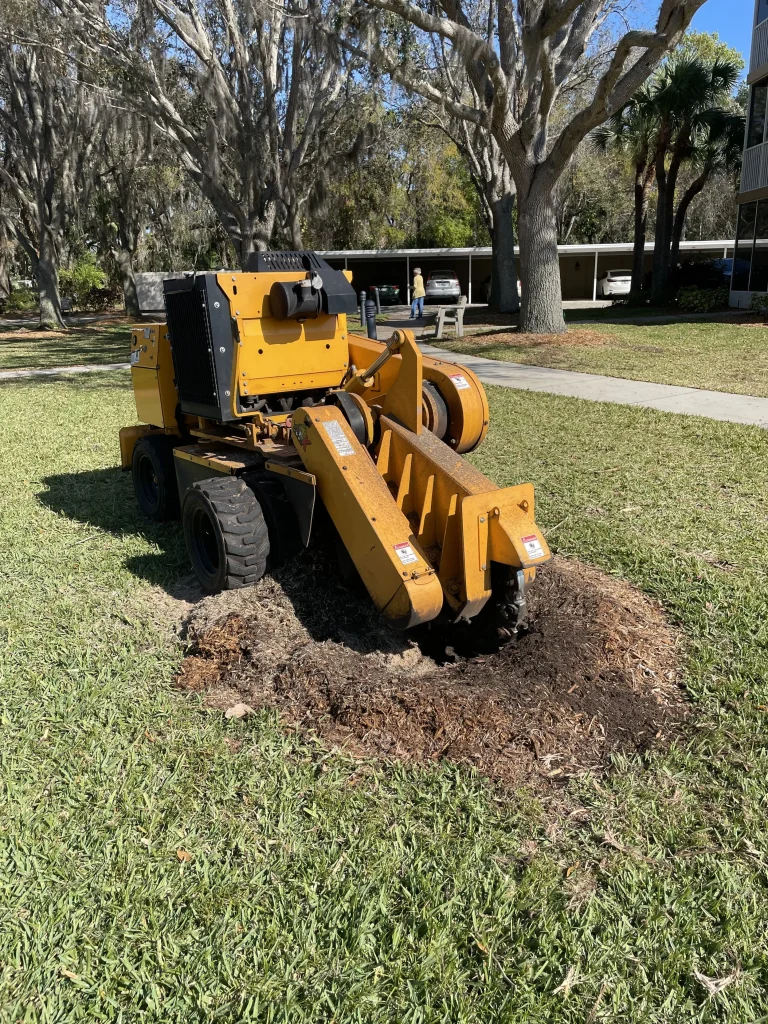
Stump grinding uses a rotating carbide-tipped cutting wheel to shred the stump into wood chips, typically 6–12 inches below grade. The roots are left in the ground and decompose naturally over several years. The resulting wood chip debris can be used as mulch or removed. Grinding is fast (most stumps take 30–90 minutes), cost-effective, and leaves a plantable surface within days.
What Is Stump Removal?
Full stump removal means excavating the entire root system out of the ground — stump, tap root, and all lateral roots. This is accomplished with heavy equipment (backhoe, excavator) and requires significant site disruption. The hole left behind needs to be filled and graded. It’s much more expensive and disruptive, but leaves no roots in the ground whatsoever.
Stump Grinding vs. Stump Removal: Side-by-Side Comparison
Cost: Grinding runs $100–$450 per stump. Full removal runs $300–$1,200+ depending on root mass and excavation needed. Time: Grinding: 30–90 min per stump. Removal: 2–6 hours or more. Disruption: Grinding is minimally invasive — equipment fits through most gates and causes little lawn damage. Removal requires heavy equipment with significant ground disturbance. Roots remaining: Grinding leaves roots in place (decompose in 3–10 years). Removal eliminates all roots. Re-planting: After grinding, fill the void and plant grass within days or a new tree in 6–12 months. After removal, fill and replant immediately. Best for: Grinding for most homeowners. Removal for construction sites or when roots are causing active foundation damage.
When Does Stump Removal Make Sense?
- You’re installing a concrete foundation, pool, or large structure directly over the stump location.
- The tree was an invasive species known to regenerate from root fragments (Chinese tallow, Brazilian pepper).
- Active root damage is occurring to your foundation and all roots must be eliminated.
- A contractor requires a fully clear site for major construction or utility work.
When Stump Grinding Is the Better Choice
For the vast majority of Sarasota homeowners, grinding is the right answer. It’s faster, cheaper, and less disruptive. The leftover roots decompose without causing problems in most cases — the main exception is if you’re planting a new tree exactly in the same spot within a year. Pairing tree removal with same-day stump grinding saves money since equipment is already on-site. See what our typical Sarasota customers pay by calling (941) 451-9730.
Frequently Asked Questions
Will a ground stump sprout again?
Most tree species cannot re-sprout once the stump is ground down. A few aggressive species (laurel oak, crepe myrtle, certain palms) may send up shoots from roots for a season. We can treat these with herbicide if needed.
How deep does stump grinding go?
Standard grinding depth is 6–12 inches below grade, which is sufficient for grass or garden planting. If you need the space for concrete or deep-rooted plantings, we can grind deeper on request (extra cost).
Can stump grinding damage underground utilities?
Yes — this is why we always call 811 (the national utility locate service) before any stump grinding. All utility lines are marked before we start. Never hire a company that skips this step.