7 Signs a Tree Is Dying or Dead — And What to Do Next
A dying tree doesn’t always look like the dead trees you see in the movies. Most of the time, the warning signs are subtle — and easy to dismiss until the tree is already a safety hazard. Catching the signs early gives you options. Catching them too late means emergency removal under pressure.
Here are the seven most reliable indicators that a tree in your Sarasota yard is dying — or already dead.
1. Bare Branches That Don’t Leaf Out in Spring
If a section of your tree — or the entire canopy — fails to produce leaves when surrounding trees are actively growing, that section is likely dead. Florida’s subtropical climate means most non-deciduous trees maintain some leaf cover year-round. Patches of bare branches outside any normal seasonal pattern are a clear warning sign.
2. Peeling, Cracked, or Missing Bark
Bark is a tree’s protective skin. Large areas of peeling or missing bark — called cankers — indicate disease, pest infestation, or physical damage the tree can’t recover from. Some bark shedding is normal (crape myrtles shed naturally), but extensive bare wood exposed to the elements means the tree is compromised.
3. Fungal Growth at the Base or on the Trunk
Mushrooms growing from the root zone or shelf fungi (conks) attached to the trunk are almost always signs of internal wood rot. The fungal growth you see on the outside represents extensive decay on the inside. A tree with significant fungal growth at its base can be structurally unsound even if the canopy still looks healthy.
4. Vertical Cracks or Splits in the Trunk
A single vertical crack can indicate lightning strike damage or internal structural failure. Multiple cracks, or cracks that gape open, mean the tree’s structural integrity is compromised. Any tree with trunk cracks near your home or other structures is a priority for professional assessment.
5. Leaning That Developed Suddenly
Trees that have always had a slight lean may be fine. A tree that has recently started leaning — especially if the soil around the base has heaved, cracked, or pulled away — signals root failure. Root failures can cause a complete tree fall with very little warning and are an emergency situation.
6. Dead Wood in the Canopy
Dead branches that remain in the canopy after surrounding branches have leafed out are a hazard regardless of whether the tree itself is dying. These widow-makers break without warning, often during periods of calm weather rather than storms. Any dead branch over your home, car, pool enclosure, or areas where people walk should be removed promptly.
7. Insect Damage and Exit Holes
Small, round holes in the bark, sawdust-like frass at the base, and weeping or discolored sap are signs of active infestation. Ambrosia beetles — a serious threat in Florida — can kill an otherwise healthy tree. If you notice these signs combined with any canopy decline, an urgent arborist inspection is warranted.
What to Do If You Notice These Signs
Not every declining tree needs immediate removal — but all of them need assessment. The key questions are whether the tree poses a risk to structures or people, and whether it has any realistic chance of recovery with treatment. For trees within striking distance of your home, car, or pool in Sarasota County, schedule an inspection before June 1 — not after the first storm of hurricane season.
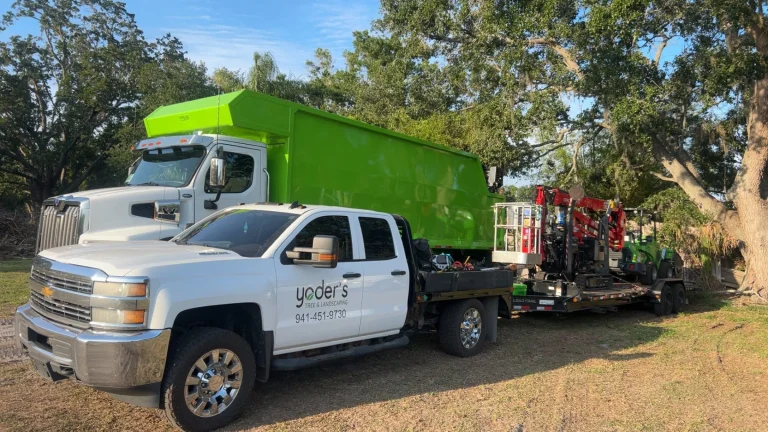
Ready to schedule? Call (941) 451-9730 or request a free estimate online. Yoder’s Tree and Land Services serves Sarasota, Bradenton, Venice, and Siesta Key — and every estimate is free.